

A real (beautiful) thing.
Combining technical precision with artistic vision, I create each fine art print myself using carefully selected archival materials. Each piece is crafted to exist as a physical object with presence and permanence—bringing enduring connection, meaning, and beauty to the spaces you love.
-
For each print, I handselect the specialty paper that best suits the image and feeling it conveys. Each print’s paper is listed in its description. However, here are some of my favorite papers you’ll see I use often:
Moab’s Entrada Rag Bright 300, a museum-quality fine art paper made of 100% cotton. It has a beautiful feel - heft meets luxurious softness, and holds color like a champ.
Moab’s Moenkopi Unryu is a washi paper made in Tokushima, Japan from Kozo (mulberry fiber). It offers an unrivaled combination of strength and lightness. Holding it up to the light, it glows. It’s elegant delicateness and rich texture are perfect for my origami-based work.
-
All prints are made with Epson’s UltraChrome PRO10 archival pigment inks.
These 10 premium inks were designed specifically for fine art photograhers, and offer one of the widest color gamuts available, ensuring every subtle tone in my images can be faithfully translated into physical form.
-
I offer both limited and open editions.
My fine art series are primarily printed as limited editions, usually available in two sizes in editions of 5 and 15.
However, some selected series and images are offered as open editions, priced and sized for a wider audience of art enthusiasts. -
I personally handle every aspect of the printmaking process—from color management to proofing to final trimming—ensuring you receive exactly the piece I envisioned. Mastering both technical and creative elements of fine art printing has become a focused passion of mine, as it allows me to transform a digital capture into a tangible object with its own presence and character.



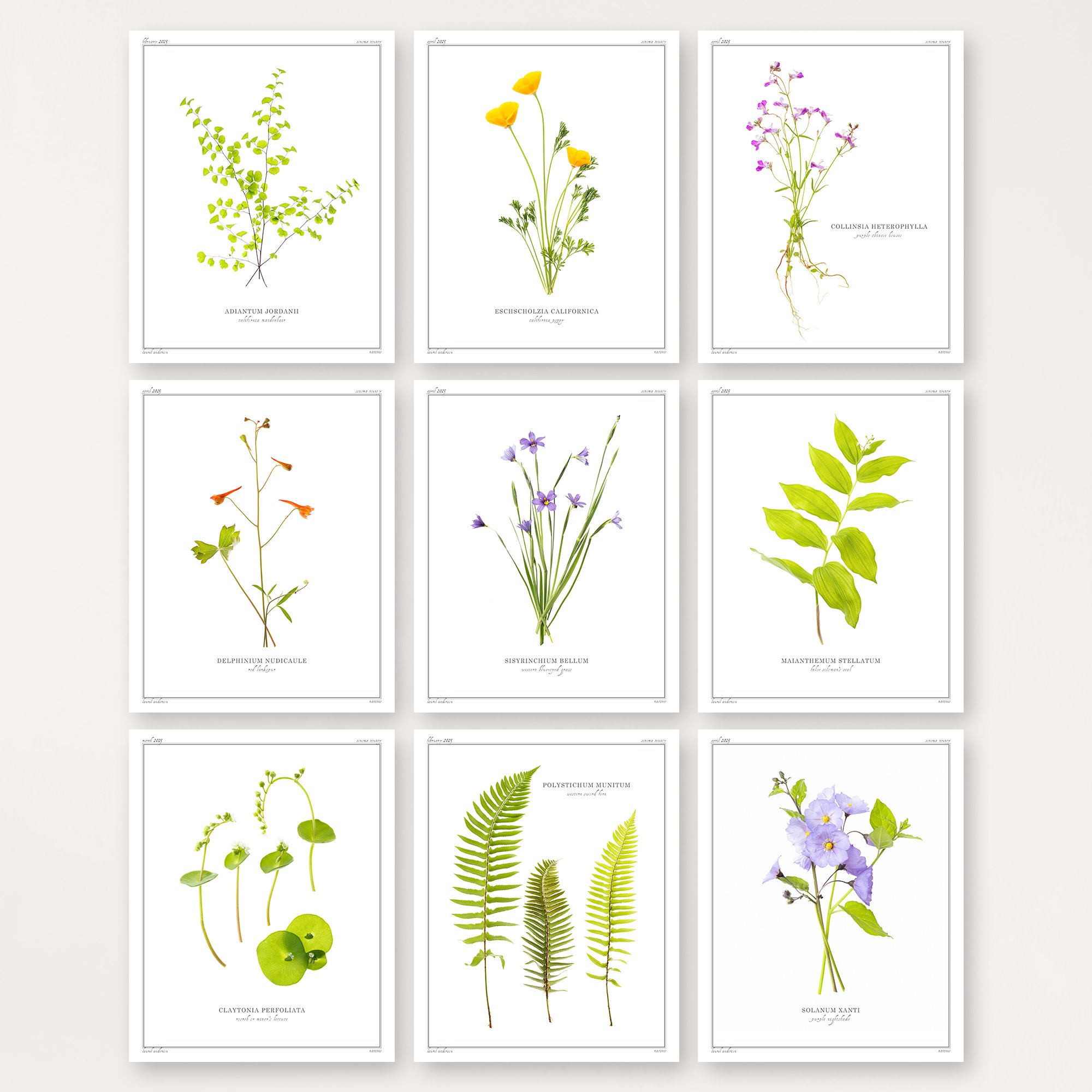
California Maidenhair Fern, Adiantum jordanii, grows in moist, shady locations along streams and north-facing slopes throughout California, recognized by its fan-shaped leaflets and black stems. It cleverly adapts to California's climate by going dormant during dry summers, reappearing with winter rains.
Native Costanoan people used decoctions for pain relief, blood purification, and digestive aid, while the Pomo and Kashaya utilized the strong black stems for basketry and earrings.
Symbolism: The name Adiantum means "unwettable," as water beads on its leaves, symbolizing purity and innocence in folklore.
Each print is made by the artist using archival quality pigment ink on Moab’s Entrada Rag Bright 300 paper.